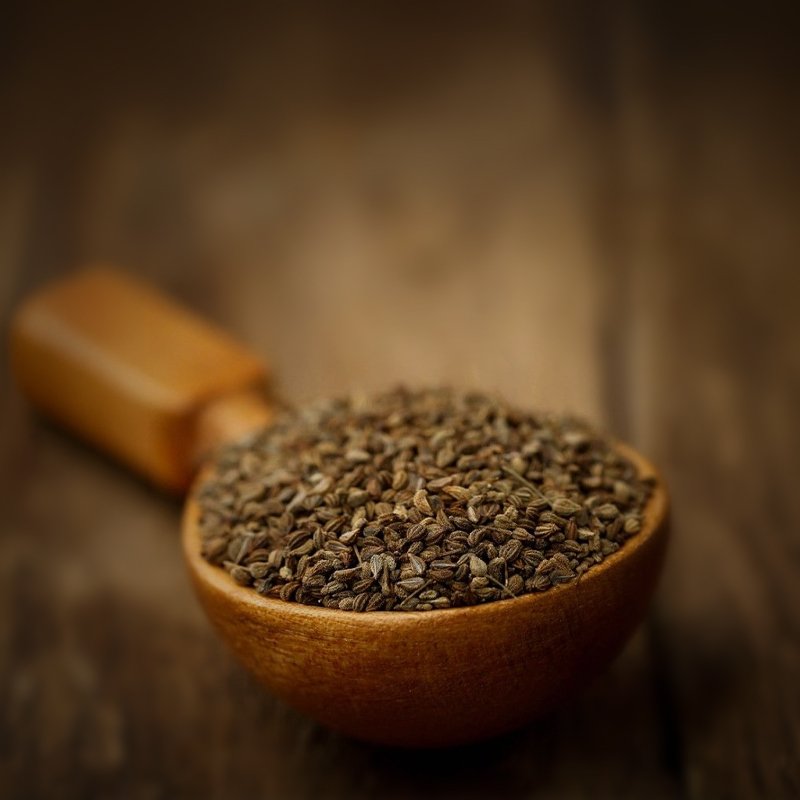
Ajwain is mainly cultivated by farmers in regions with a dry and cool climate. Well-drained loamy soil is considered ideal for its cultivation. Before planting, the soil is thoroughly loosened and mixed with organic manure to improve its fertility. Since ajwain seeds are very small, farmers usually mix them with sand before broadcasting them over the field. After sowing, the soil is lightly watered to help the seeds germinate. As the plants grow, the weeds around them need to be removed regularly. Since excessive waterlogging can cause the roots to rot, only a limited amount of water should be provided. Within a few months, the plant develops into a small leafy shrub and produces small white flowers arranged in umbrella-shaped clusters. These flowers later develop into small greyish-green seeds.
Harvesting usually begins about five to six months after planting. Farmers start harvesting when the seed clusters change from green to a light brown or yellowish colour. The plants may be harvested by cutting them completely, or the mature seed-bearing parts may be picked by hand. The harvested plants are then spread out in the sun for several days to dry thoroughly. Once they are completely dry, the seeds are separated from the stems by beating them with sticks or by hand. The seeds are then winnowed to remove dust and unwanted plant material. After cleaning, they are packed and prepared for the market.
Ajwain is more than just an agricultural crop; its distinctive aroma and traditional medicinal value make it an important ingredient in many households. The essential oil called thymol present in ajwain is responsible for much of its characteristic flavour and is also associated with its traditional uses. In Ayurveda and traditional medicine, ajwain has long been used for digestive complaints. It is traditionally consumed by chewing the seeds or drinking water in which ajwain has been boiled, particularly for problems such as indigestion, stomach discomfort, gas and heartburn. It is also traditionally used for respiratory discomfort. Inhaling steam prepared with crushed ajwain or consuming it with warm water is a common home remedy for congestion, common cold and cough.
In cooking, ajwain is used not only to enhance the flavour and aroma of dishes but also because it is traditionally believed to support the digestion of fried and heavy foods. In addition, because of its antimicrobial properties, ajwain and its components are used in some products such as tooth powders and botanical pest-control preparations.