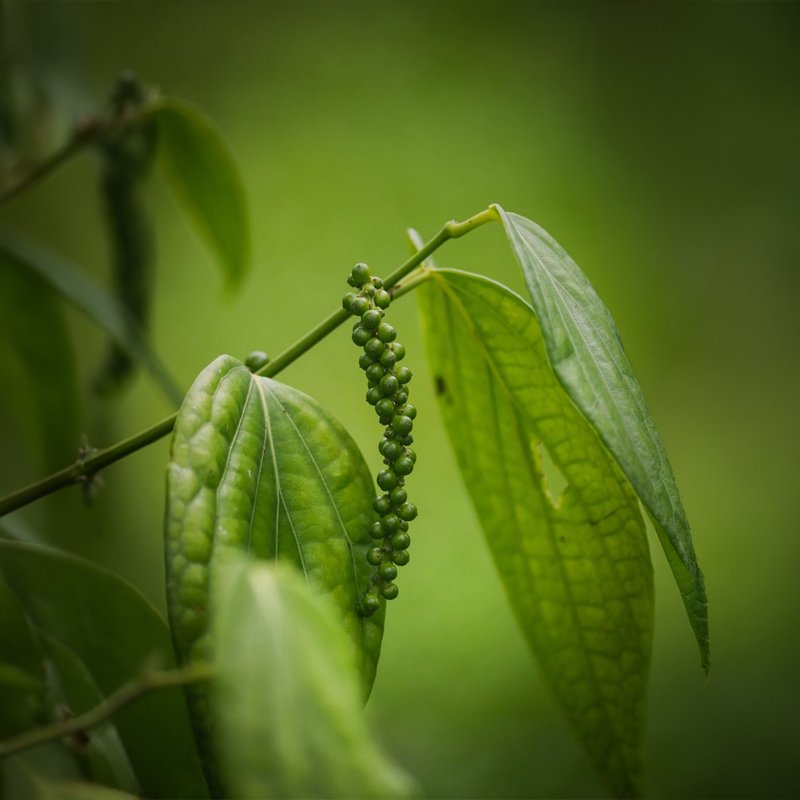
Black pepper is one of the most important and widely used spices in the world. It’s often known as Black gold.it is harvest from climbing vine scientifically known as piper nigrum. It grows best in warm and wet tropical climate. Heavy rainfall, fertile soil and filtered shade are ideal for it’s cultivation. Unripe berries are cooked in hot water and dried until they turn dark brown or black.
New seedlings are usually prepared using stems from healthy pepper vines. These are planted at the base of support trees and trained to climb upwards. For their growth, organic fertilizer, water, and necessary shade are provided, while weeds, pests, and diseases are controlled. After flowering, green pepper berries form in clusters and gradually mature.
Harvesting is done when the berries are fully grown and some start turning yellow or red. The harvested pepper is cleaned, separated from the stems, and dried. It is usually dried either in the sun or with the help of machines. Upon drying, the green berries shrink and turn black. Subsequently, they are cleaned, graded according to quality, and packed.
The processed pepper reaches the market from farmers through traders, cooperatives, wholesalers, and processing companies. It is sold both as whole peppercorns and as powdered pepper. It reaches consumers through grocery stores, supermarkets, restaurants, food processing companies, and online marketplaces.
From the farmer’s hard work to reaching our kitchens, pepper goes through a long journey of cultivation, harvesting, processing, packing, and marketing. The hard work and care of a farmer are hidden in every single peppercorn.